
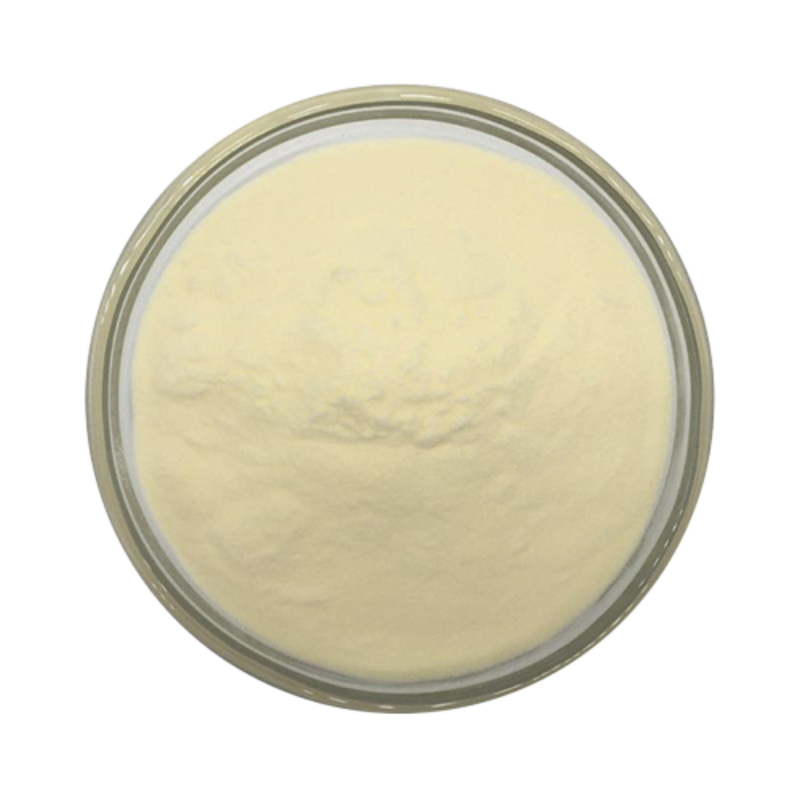









Product Introduction
Honey powder, also known as dried honey powder, is a solid powder made from high-quality honey through processes of filtration, blending, concentration, crystallization, and drying. Honey powder (Honey Powder), also called solid honey, was first developed in the early 1960s by American food processing companies. It was created to resolve issues with liquid honey, such as high water content, strong hygroscopicity, difficulty in storage and transport, and challenges in ensuring food hygiene, safety, and stability.
Honey, as a highly viscous colloidal fluid, can react with metal containers due to its acidic components, causing corrosion. Additionally, honey is susceptible to seasonal and temperature changes. In high summer temperatures, most of the reducing sugars in honey ferment into acids, limiting its storage time. In winter, when temperatures drop below 15°C, honey tends to crystallize partially, affecting its solubility and uniformity, thus complicating its transportation, storage, and consumption. Converting honey into honey powder retains its nutritional value while making it easier to transport, store, and further process. The successful development of honey powder has significantly enhanced the application depth and breadth of honey in the food processing industry, expanded the usage of natural honey, and fundamentally resolved the challenges associated with using liquid honey and ensuring food safety.
Honey Powder Production Process
Currently, common methods for processing honey powder include heated drying, heated roller pressing, cold press rolling, crystallization, vacuum drying, microwave vacuum drying, vacuum freeze-drying, drum drying, and spray drying.
- Heated Drying Method
- A type of hot air drying (convection drying). High-temperature hot air is used as the heat source, transferring heat to the material through convection. The hot air serves as both the heat carrier and the moisture carrier. Typically, hot air drying is conducted under atmospheric pressure. Under vacuum drying, due to the low pressure of the gas phase, its heat capacity is very small, making it impossible to use air as the heat source directly, requiring other heat sources instead. At 35~45°C for 8~12 hours, however, due to the long heating time, honey loses many of its functional components during prolonged heating, requiring a long cycle and not allowing continuous production.
- Heated Roller Pressing Method
- This method uses a mixture of 30% soy flour or starch with 70% honey, along with an appropriate amount of lecithin and anti-caking agents. Additionally, pure honey powder can be prepared by first concentrating honey, then heating it, and finally pressing it into solid honey flakes using a pair of cold rollers. The contact temperature during heated roller pressing is relatively high, exceeding 100°C, which results in some loss of honey's functional components.
- Cold Press Rolling Method
- Process flow: Raw honey blending → Heating and dehydration → Heating → Cold pressing → Drying → Pulverizing → Packaging. First, blend raw honey from different sources to meet processing standards. Then, add the blended raw honey into an evaporator, quickly heating it to reduce the water content to 1%-2%. The dehydrated honey is then passed through a specially designed heat exchanger, raising the honey temperature to 116°C within 10 seconds. Next, the heated honey is pressed into dry flakes by a pair of cold press rollers (temperature around 0°C), then pulverized into powder and packaged. The production cost of this honey powder is much lower than that of freeze-dried honey, but it has an obvious drawback: it cannot maintain the natural taste and nutritional value of honey, so this method is generally used for lower-grade honey.
- Crystallization Method
- The crystallization technique is used to produce solid honey. Crystallized honey is made by concentrating liquid honey, preparing seed crystals, inoculating, homogenizing, and inducing crystallization to create a white, oil-like crystallized honey. Additionally, co-crystallized honey granules are developed by using sucrose as a carrier matrix, allowing sucrose to naturally crystallize in a high-concentration syrup to form microcrystalline aggregates, with honey uniformly embedded within. The crystallization process is long, and the product's temperature must be controlled within the crystallization range; otherwise, the product is prone to moisture absorption and reversion.
- Vacuum Drying Method
- Process flow: Raw honey blending → Vacuum drying → Ultrafine pulverization → Packaging. Contact drying (conduction type) is one method. After blending raw honey with an auxiliary dehydrating agent, the mixture is spread on drying trays and vacuum dried at 50°C-80°C. The dried honey is then ultrafine pulverized and packaged as honey powder. This method's drawback is that the vacuum conditions cause honey's aroma to be lost during evaporation, reducing the quality. Although functional components are preserved, honey cannot be completely dried; when exposed to air, concentrated honey quickly absorbs moisture and becomes a hard, unmanageable mass.
- Microwave Vacuum Drying Method
- Process flow: Raw honey blending → Preheating and melting → Water bath melting → Filtration → Honey concentration measurement → Microwave vacuum drying → Cooling, pulverization → Hollow packaging. First, raw honey from different sources is evenly blended and preheated (20°C-35°C), then heated to 50°C in a water bath melting tank with continuous stirring, filtered, and the honey concentration measured. Microwave vacuum drying is then applied, with the temperature maintained at 35°C-50°C, reducing water content to 2%-8%, followed by pulverization and packaging. Microwave vacuum drying technology retains the original color, aroma, taste, and heat-sensitive nutrients or active ingredients of the dried material, yielding good-quality dry substances. It is particularly advantageous for drying high-viscosity foods. Microwave vacuum drying honey is fast, with low temperatures (not exceeding 50°C), avoiding Maillard reactions during drying, and resulting in honey with little color change, although there may be some changes in volatile components.
- VacuumFreeze-Drying Method
- Process flow: Raw honey → Low-temperature freezing → Vacuum drying and dehydration → Pulverization → Packaging. Vacuum freeze-drying of food involves sublimating and removing frozen moisture in the food under low-temperature, low-pressure conditions below the triple point of water. Water can exist in three states: solid, liquid, and gas. According to thermodynamics' phase equilibrium theory, as pressure decreases, water's freezing point changes little, but its boiling point decreases, approaching the freezing point. When pressure drops to a certain vacuum degree, the boiling point and freezing point of water coincide, allowing ice to directly vaporize into gas without passing through the liquid phase, a process called sublimation. This method has a long production cycle, high costs, and is technically challenging for honey drying.
- Drum Drying Method
- Process flow: Mixing raw materials → Insulation → Colloid milling → Drum drying → Pulverization → Packaging. In this method, raw materials are mixed in a certain proportion (material concentration 80%, dextrin content 20%), colloid milled at a certain temperature (22°C) for thorough mixing, and drum-dried to obtain low-moisture solid honey. The dried honey is then pulverized and packaged. Drum drying temperatures range from 125°C to 135°C, with a drying time of 60 seconds. Drum drying is suitable for processing fine-grained, low-viscosity materials. In the formulation for drum drying solid honey, honey, dextrin, and water are included, and the temperature of the drum surface and drying time also affect production and quality. As the food industry continues to develop, drum drying has attracted attention due to its high drying rate, low operating costs, and continuous operation, making it an economical continuous production technology. Drum-dried solid honey products are fine in texture, safe, non-toxic, cost-effective, have good rehydration properties, are easy to package, convenient to eat, resistant to moisture absorption, and clumping, and retain the unique flavor of honey. This method is used by Tongli Foods Co., Ltd. in Wuhu.
- Spray Drying Method
- Process flow: Honey → Blending → Heating → Mixing → Homogenization → pH adjustment → Spray drying. Spray drying is a method of processing solutions, emulsions, suspensions, or slurry materials into dry powders in a single step. The liquid is atomized into fine mist droplets using an atomizer, and the droplets are uniformly mixed with the drying medium (hot air, flue gas, or inert gas), undergoing energy and mass exchange to evaporate the moisture (or solvent). Liquid honey is typically processed using spray drying. Spray drying atomizes liquid materials into fine mist droplets using
Benefits and Uses of Honey Powder
- Regulates Digestive Function
Honey powder contains active enzymes that stimulate stomach acid secretion and enhance gastrointestinal motility, aiding digestion and absorption. It can relieve symptoms such as constipation and bloating. Additionally, the nutrients in honey support the growth of beneficial gut bacteria, maintaining intestinal balance and protecting the digestive system.
- Promotes Sleep
Honey powder has glucose and vitamins that boost metabolism, help relieve fatigue, and promote sleep. The nutrients in honey also improve blood circulation, which can help alleviate tiredness.
- Reduces Fatigue
Rich in antioxidants, honey powder helps alleviate cell fatigue and boost the immune system.
Applications of Honey Powder
- In Baking Products
Honey powder can be used in a wide range of baked goods such as bread, cakes, cookies, and mooncakes, as well as in pre-mixed powders. It can function as both a product enhancer and a sweetener without added sugar. Specific benefits include:
- Improving the texture and elasticity of baked goods, making them rise well.
- Enhancing product appearance and taste. It helps maintain moisture in high-water-content baked goods and creates a crisp texture in high-sugar, low-moisture items.
- Providing a major energy source for yeast fermentation, promoting yeast growth and dough rise.
- Producing a golden-brown crust and enhancing the baking aroma. It also shortens baking time and temperature, making it an effective natural colorant.
- Enhancing dough properties, improving gluten expansion, and increasing dough plasticity to prevent shrinkage and deformation.
- Offering natural sweetness and moisture retention, which benefits high-water-content pastries and keeps baked goods soft for longer periods.
- Masking undesirable odors and enhancing flavor, such as removing eggy or off-flavors in cakes and reducing oil return time in mooncakes.
- Convenient to use in large-scale industrial production; it integrates easily into flour and is ideal for central factories or frozen dough plants.
In Bread
Honey powder improves the texture, elasticity, cohesiveness, and resilience of bread, reduces crumb hardness, and enhances overall quality. It can also increase bread volume and improve taste while reducing costs.
In Cakes
Honey powder significantly enhances cake flavor and aroma, masking eggy and greasy tastes. It improves cake hardness, cohesiveness, elasticity, and resilience. Cakes made with honey powder have a softer texture and a golden color, with reduced oil return time and quicker browning. Baking time and temperature may need adjustment.
In Cookies
Honey powder improves both the flavor and texture of chewy and crispy cookies. It can enhance milk flavors when combined with milk powder, making cookies crispy and flavorful. It also increases hardness in chewy cookies, promotes coloring, and improves texture and taste.
In Mooncakes
- Produces a translucent, attractive, and fluffy crust.
- Reduces oil return time by more than half.
- Improves the quality of mooncakes, enhancing sensory attributes.
- Reduces the amount of sugar used, making it suitable for a broader audience.
- In Dairy and Frozen Desserts
- Honey powder integrates flavors from various ingredients, enhancing the desired characteristics of the final product. It effectively masks rough textures and unpleasant flavors in mid-range products and can act as a base for richer flavor profiles, making it ideal for products like liquid milk, peanut flavor, malt flavor, chocolate, taro, nut flavors, and cereal products.
- For frozen desserts, it speeds up surface drying, reduces ice crystal size, and improves texture and chewiness.
Comparison to Liquid Honey
- Honey powder offers better food safety compared to liquid honey, avoiding issues like unseen impurities, sugar-tolerant yeasts, and potential allergens. It also suits large-scale industrial production better.
- In Ice CreamHoney powder, used in ice cream production, combines natural nutrition, health benefits, and cost reduction. It enhances flavor, texture, and sweetness, improving the product's taste and mouthfeel. Specific benefits include:
- Improving texture and flavor, offering a refreshing, smooth taste.
- Increasing product stability due to honey's water-holding properties, enhancing resistance to melting, and serving as a thickener and binder.
- Honey’s acidity helps inhibit harmful microorganisms.
- Creates a finer texture and quicker surface drying.
- In Meat ProductsHoney powder innovates traditional meat product ingredients, improving flavor, texture, and color while reducing odors and enhancing freshness. It also increases yield by retaining moisture, softening the product, and improving appearance. The natural sugars and amino acids in honey powder contribute to a natural, appealing color and lasting freshness.
- In Other Products
- In products like plant-based cream, peanut butter, and health supplements, honey powder adjusts and refines flavor, masks off-notes, and enhances smoothness, fullness, and natural aftertaste.
Honey powder retains honey’s nutritional value while overcoming the inconveniences of liquid honey, making it a versatile and healthy ingredient in baking, ice cream, dairy products, meat products, flavorings, cereals, and more.
Packaging and Storage of Honey Powder
Storage Conditions: This product should be sealed and protected from light, kept away from high temperatures, and stored in a dry, cool, and well-ventilated place.
Packaging: Bulk packaging is 25 kg per cardboard drum, with samples packaged in 1 kg aluminum foil bags. Custom packaging is available upon request.
Transportation: Shipping can be by express or freight. Domestic express delivery typically arrives within three days, while freight takes about five days. Prices generally include domestic shipping costs.
Shelf Life: Two years.
Source: Honey
We know that when bees produce honey, the “raw materials” they collect mainly come from nectar in flowers. However, when nectar is scarce, bees may also collect honeydew or plant exudates. Thus, honey can be classified into natural honey and honeydew honey.
- Natural Honey:
Natural honey is produced by bees from collected nectar. This nectar comes from the nectar glands inside or outside flowers of plants. The term “honey” generally refers to natural honey, which is further categorized based on the plant source during the flowering period, such as orange blossom honey, linden honey, lychee honey, acacia honey, clover honey, canola honey, jujube honey, wild osmanthus honey, longan honey, wild chrysanthemum honey, and wolfsbane honey.
Although bees may focus on a single plant during a specific period, most honey contains pollen or nectar from several types of plants. For example, in southern China, lychee flowers are followed by longan flowers, and rapeseed flowers are followed by clover blooms. Therefore, longan honey may contain components of lychee honey, and early clover honey may have traces of rapeseed honey. Typically, honey is named after one or more primary plant sources. For instance, linden honey from Northeast China should predominantly contain linden pollen, resulting in a pale and smooth honey. However, honey that contains pollen from two or more plant species, gathered during overlapping bloom periods, is generally referred to as mixed-flower honey or "wildflower" honey.
Before people had a good understanding of nectar-producing plants, they would classify honey simply based on the season of production as spring honey, summer honey, autumn honey, or winter honey.
- Honeydew Honey:
Honeydew honey is made from honeydew or insect secretions (referred to as honeydew) that bees collect from plant leaves or stems. Aphids extract sap from plants, digest it, and excrete the excess sugars and water onto the plant's branches and leaves. Bees then use this excretion as a raw material to produce honeydew honey.
Honey, also known as "sweet honey," is a sugar-saturated solution produced by bees. It tends to crystallize at low temperatures, with glucose being the component that crystallizes, while fructose remains in a liquid state.
In April 2022, the State Administration for Market Regulation issued new guidelines for honey product manufacturing licenses, which stipulate that honey, royal jelly (including freeze-dried royal jelly), and bee pollen cannot contain any added substances. Additionally, honey-based products must not contain starch syrup, corn syrup, or any other added sugars.